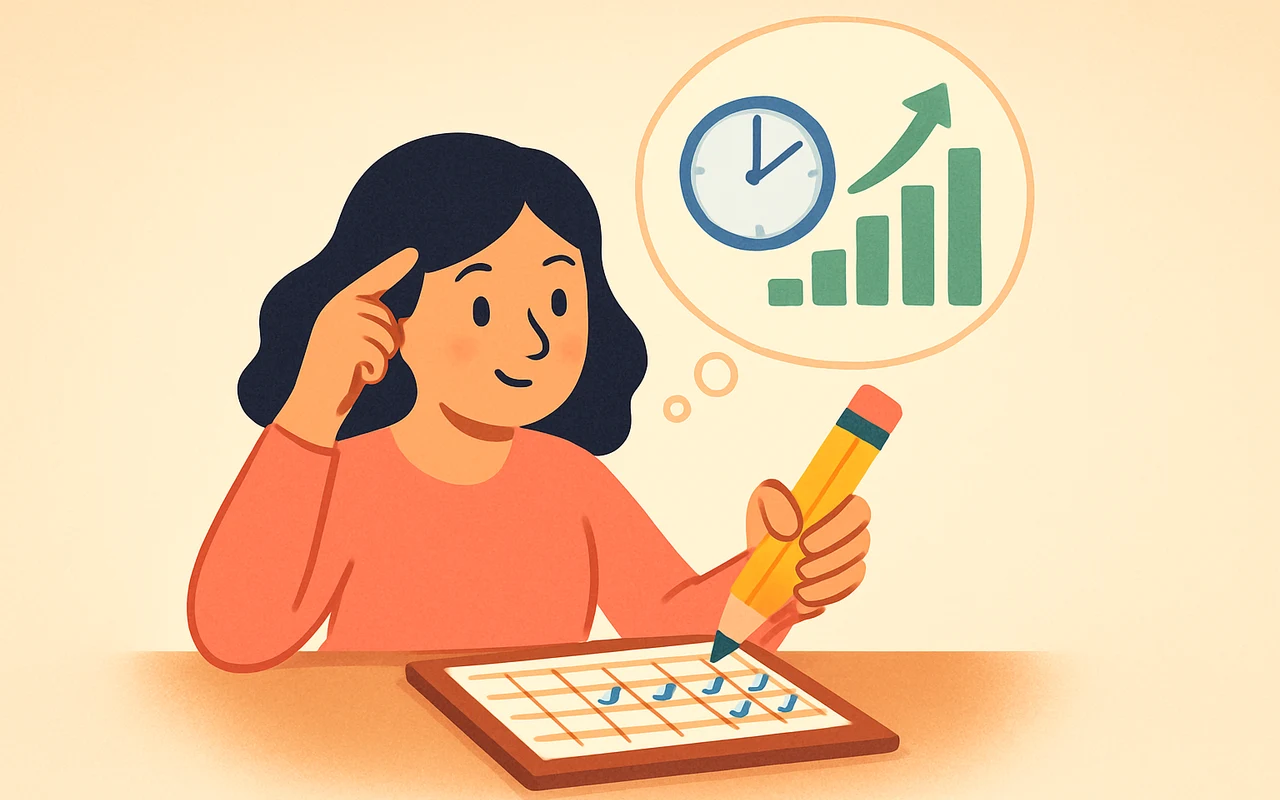
Saying "I want to learn guitar" or "I want to learn to code" is a wish. Saying "I will spend 60 hours on it over 12 weeks" is a plan. An hour target turns a vague goal into something you can measure, schedule, and adjust.
This guide explains how to choose a sensible number, divide it into sessions you will actually complete, and track it without turning learning into bookkeeping.
Choosing an Hour Target That Fits the Skill
An hour target is the total time you commit to deliberate practice before you reassess. It is not a promise of mastery. It is a checkpoint, a point where you look at what you can do and decide whether to continue, change method, or stop.
Start from a definition of "good enough"
The number depends on the outcome you want. "Hold a basic conversation in Spanish" needs far fewer hours than "pass a professional exam." Write one sentence describing what you want to be able to do, and make it observable.
- Weak: "Get good at drawing."
- Strong: "Draw a recognisable portrait from a photo in under an hour."
Use ranges, not magic numbers
You may have heard that 10,000 hours creates mastery. That figure comes from research on elite performers such as violinists and was popularised in books; it does not describe how long it takes to become competent. Basic competence in many skills arrives much sooner, often within tens of hours of focused practice.
A practical way to pick a starting figure:
- Choose a small, concrete outcome.
- Look for reports from learners who reached it, such as course durations or community threads.
- Take the middle of that range and add 20 percent for slow days and detours.
For example, if learners say a beginner web project takes 40 to 60 hours, you might set 60. Treat it as a first estimate, not a verdict on your ability.
Turning the Total Into a Schedule You Can Keep
A big total feels distant. The fix is to convert it into a weekly rhythm that fits your actual life, not your ideal one.
Work backwards from your calendar
Divide the target by the number of weeks you are willing to spend. Sixty hours across 12 weeks is five hours a week. Then split that into sessions, such as five 60-minute blocks or three 100-minute ones.
Be honest about energy as well as time. A 30-minute session on a tired weekday often beats a planned three-hour weekend marathon that never happens.
Make sessions count
Hours only help if they involve effort at the edge of your ability. Watching tutorials passively is easy to log but teaches less than attempting something and getting it wrong. Aim for a mix:
- Short instruction or reading to learn one idea.
- Active practice, such as exercises, a small project, or playing a piece.
- Review of mistakes, ideally the same day.
Many learners follow a rough rule of making practice the larger share of each session, with instruction a smaller part.
Track simply
A spreadsheet, a notes app, or a habit tracker is enough. Log the date, minutes, and one line about what you did. Time-tracking apps such as Toggl Track can automate the timing if you prefer, but a paper calendar with ticks works just as well.
Keep the log honest by counting only focused time. If you spent 10 minutes of a 60-minute block on your phone, record 50.
Why Targets Fail and How to Adjust
Most targets fail from design problems, not lack of willpower. Knowing the usual causes lets you fix them early.
- Too ambitious: Planning ten hours a week while working full time leads to missed weeks and quitting. Cut the plan until it feels slightly easy.
- No checkpoints: Review at 25, 50, and 75 percent. Ask what you can do now that you could not before.
- Hours without outcomes: If time is rising but ability is not, change your method rather than adding more of the same.
- All-or-nothing thinking: One missed week should not cancel the plan. Extend the deadline, not the guilt.
It also helps to set a minimum session, such as 15 minutes, for bad days. Keeping the habit alive matters more than the size of any single session.
Finally, remember the limits of the method. Hours measure input, not learning. Skills with a steep early curve, like a new language, may feel stuck around the middle, so judge progress against your concrete outcome rather than your mood.
Conclusion
A good hour target is specific, tied to an observable result, and split into a schedule you can keep even in a busy week. Start with a modest estimate, track focused time honestly, and review at set checkpoints.
When you reach the target, reassess. Either set a new number for the next level or decide the skill has given you what you wanted.