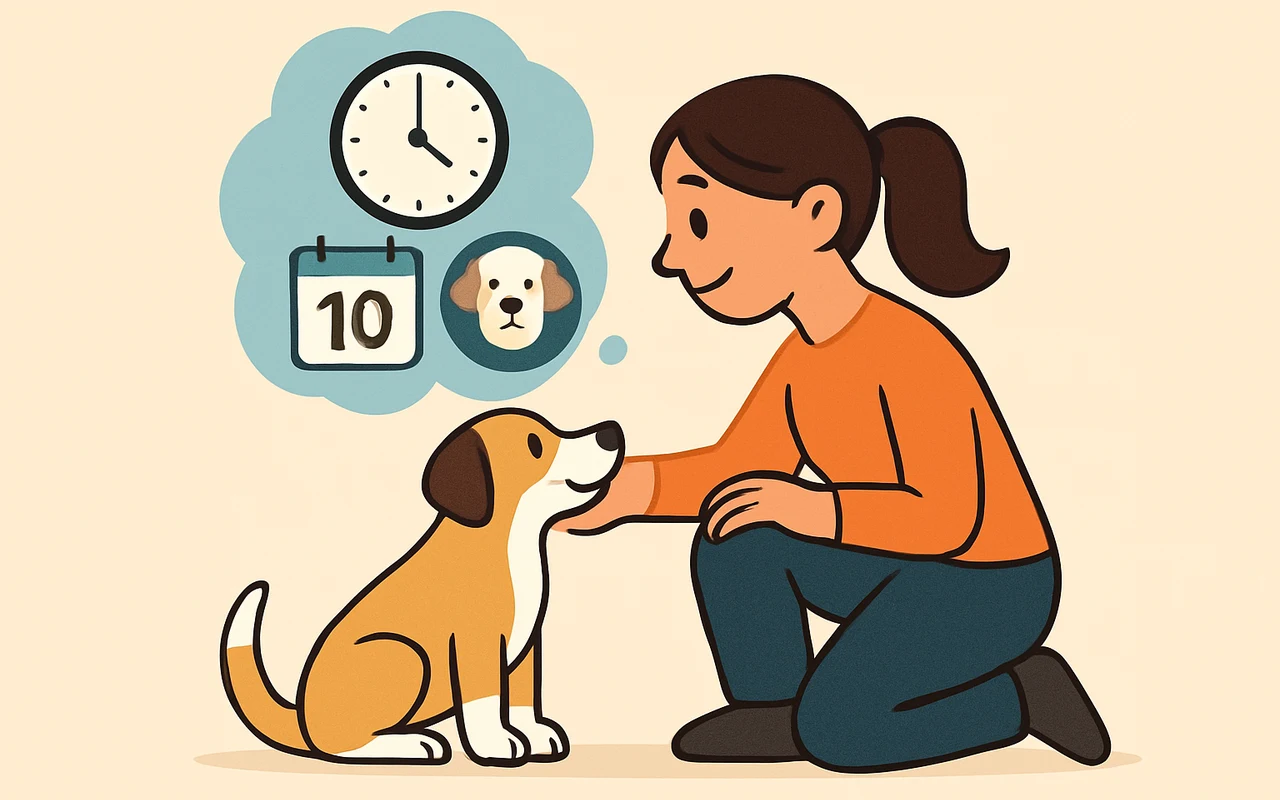
Adopting a dog is easy to decide on impulse and hard to undo. The 10-10-10 approach, borrowed from a common decision-making habit, asks how you will feel about the choice in 10 minutes, 10 months and 10 years. Here it is applied to dog ownership as a simple productivity check on one of life's bigger commitments.
It is not an official test. It is a framework for turning excitement into honest planning, using advice that shelters, vets and trainers repeat consistently.
The First 10 Minutes: Check the Impulse
The first window is about the gut reaction. A cute photo or a friend's new puppy can feel like a reason to act, but it is not a plan. Ask whether you want a dog or just the idea of one.
A few quick questions filter out most impulse decisions:
- Does everyone in the household agree? Guides from Chewy and Cathy M. Rosenthal both stress that everyone at home should be on board, and that one adult must ultimately be responsible for the dog's care.
- Does your housing allow it? If you rent, check for size or breed limits, pet fees and the risk of losing your deposit.
- Do you have trips planned? Adopt a Pet suggests waiting if you have travel in the next three to four months.
If any answer is no, pause. Waiting costs nothing, while a rushed adoption can end with a dog returned to a shelter.
The Next 10 Months: Time, Money and Training
The first year is where most surprises show up. This is when daily routines, budgets and patience get tested.
Time and energy
Be honest about the time and activity you really have. Rosenthal advises choosing a dog that fits your current lifestyle, which may mean an older, calmer dog rather than an energetic puppy. Rover also notes that puppies need considerably more work than adult dogs, including potty training.
Dogs Trust points out that a dog cannot be left alone for long stretches, and that time alone must be built up slowly. If you work long hours away from home, plan for how the dog will be looked after.
Money
Costs come in two kinds: predictable and unpredictable. RescueDogs101 budgets an average of about $100 a month for food, toys, preventive medication and unexpected vet bills. Chewy puts routine vet exams at roughly $50 to $250 per visit, depending on the dog and location.
Daily Paws suggests budgeting specifically for the first year, including vaccinations, vet visits, insurance and training. Dogster adds that you should have a plan for emergency vet bills, not just routine care.
Behavior and breed
Research breed temperament and original purpose. Grooming matters too: double-coated breeds shed heavily and "blow coat" (shed their undercoat) in spring and fall.
Victoria Stilwell notes that a dog may arrive with behavior problems. Line up a vet and a positive, reward-based trainer before you need one.
The Next 10+ Years: The Long Commitment
Lifespan estimates vary by source and breed. Dogster says most dogs live 10 years or more, and Chewy gives 10 to 13 years, with small breeds often living longer. Adopt a Pet says a dog could live 17 to 18 years, and RescueDogs101 notes lifespans can reach 20.
So a realistic planning range is a decade or more of changes in your life. Ask how the dog fits if you move, change jobs, have a child or face health issues. Rover frames the best time to get a dog as when you have the money, time and housing to support one, plus a long-term plan to keep them.
There are legal stakes as well. Dogs Trust (UK) says owners who fail to meet a pet's welfare needs can face a ban, an unlimited fine or up to five years in prison. Rules differ by country, but the principle is universal: ownership is a responsibility, not a hobby.
If you are not sure
Adopt a Pet recommends fostering or volunteering with a rescue if you are not ready for a lifetime commitment. It gives you real experience with daily care without locking you in.
Verdict
Get a dog if the idea survives all three windows: the impulse is backed by agreement at home, the first year is funded and scheduled, and the next decade has a plan. If it does not, that is useful information too.
Fostering, volunteering or simply waiting a few months are all reasonable outcomes. A well-timed yes is better for you and the dog than a hurried one.